Appraisal is not an abstract math exercise. It is an investigation into how a specific building, on a specific piece of ground, performs in a live market. In Lambton County, location has a pronounced and sometimes surprising influence on value. A warehouse a few minutes from the Blue Water Bridge will underwrite differently from one on a county road north of Petrolia. A mixed‑use building on Front Street in Sarnia has a different rent story than a storefront in Forest. Even two nearly identical industrial buildings, separated by a rail spur or a pipeline easement, can diverge in cap rates and liquidity.
I have appraised commercial property across the county for years, from Chemical Valley to Grand Bend. Patterns emerge, but rules of thumb still need local judgment. Below is how I think about location when preparing a commercial real estate appraisal in Lambton County, with examples and practical details owners, lenders, and investors tend to ask about.
Mapping the county’s value drivers
Lambton County is a mosaic of micro‑markets. Sarnia and Point Edward anchor the urban core at the St. Clair River and the Blue Water Bridge to Port Huron, Michigan. Stretching east, Highway 402 ties the county to London and the 401. Along the river to the south, St. Clair Township and Corunna align with petrochemical uses and heavy industry. North and east you find smaller centres like Petrolia, Wyoming, Forest, and Watford, where main‑street retail and light industrial mix with agricultural support uses. On the lakeshore, Grand Bend and Lambton Shores pull tourism dollars in summer and shoulder seasons.
Those distinctions matter. Tenants choose addresses for different reasons across these nodes. Logistics operators measure minutes to customs plazas. Manufacturers care about three‑phase power, gas supply, and proximity to skilled labour. Retailers study traffic counts, summer footfall, and cross‑border spending patterns. Each driver alters rents, vacancy risk, and market yields, which flow directly into a commercial property appraisal in Lambton County.
Cross‑border proximity and the Blue Water Bridge
For industrial and logistics assets, proximity to the Blue Water Bridge is often the first question. A distribution building within a 10 to 15 minute truck drive to the bridge and Highway 402 interchanges usually captures stronger demand. Even a five minute difference at peak times can be material for carriers running multiple turns in a day. Buyers and tenants pay for certainty of access and predictable travel times.
In reports, I have observed that newer, modern clear‑height warehouses along the 402 corridor and Modeland Road area can support rents roughly 10 to 25 percent higher than comparable buildings in more rural townships, with vacancy rates that are materially lower. That premium is not guaranteed for every asset. It depends on loading, yard depth, trailer parking, and the building’s age and specs. But the locational tailwind is real.
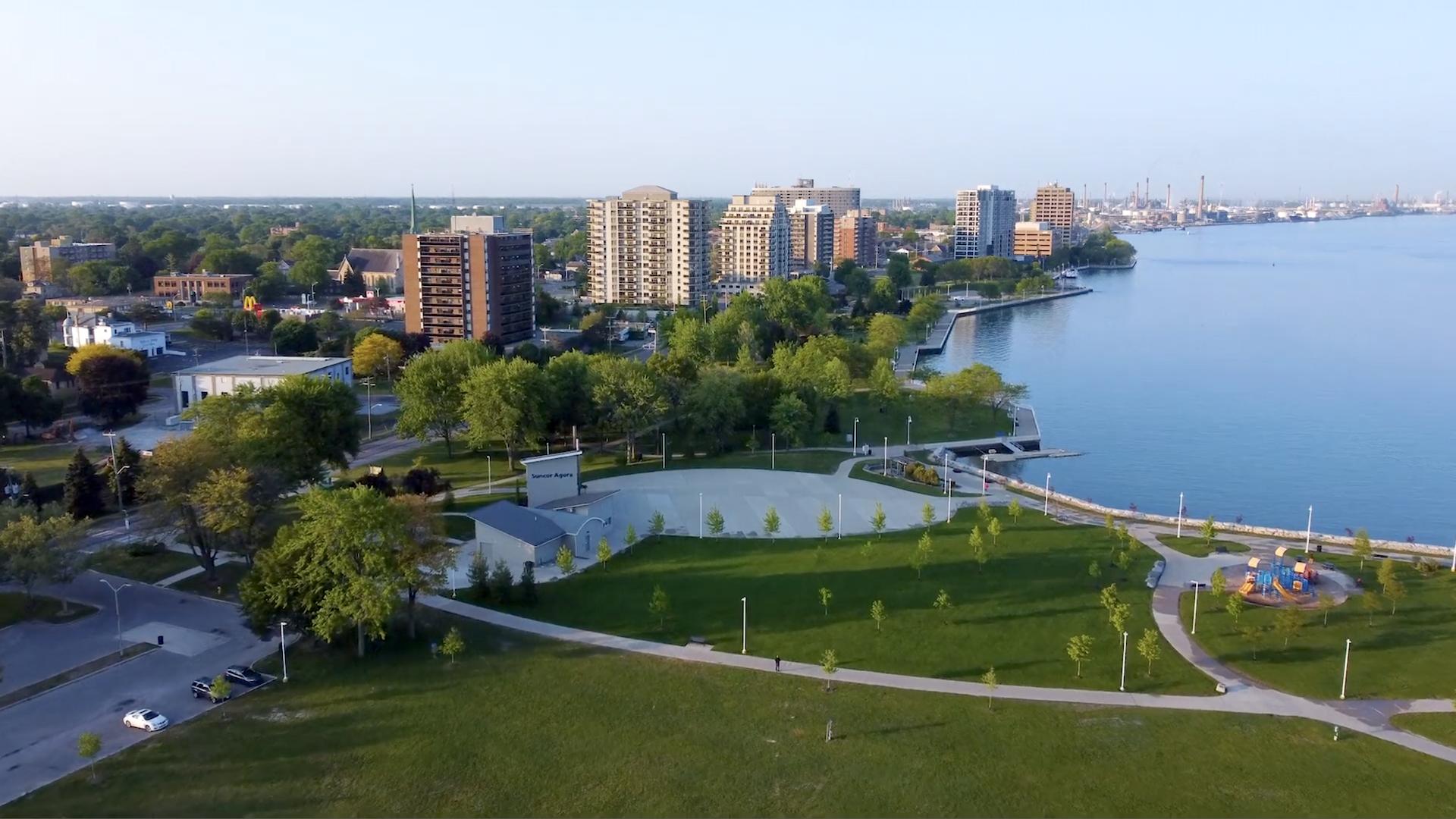
Border adjacency has a retail angle too. Exchange rates affect Sarnia’s downtown and Point Edward differently than inland towns. When the Canadian dollar hovers around 0.70 to 0.80 USD, local retailers often report steadier traffic from cross‑border visitors, particularly for dining, specialty goods, and marina‑adjacent services. When the dollar strengthens, some discretionary spend flips. In a commercial real estate appraisal Lambton County owners request for downtown storefronts, I reflect those cycles by using market rent evidence from multiple years and by stress‑testing vacancy.
Chemical Valley and industrial depth
The petrochemical cluster around Sarnia, Corunna, and St. Clair Township creates a specialized industrial ecosystem. Plants, pipelines, and storage infrastructure dictate land use, safety setbacks, and the viability of rail‑served sites. A modest single‑tenant building on a small lot can be worth more if it sits near key contractors or within a logistics triangle that heavy industry uses daily.
Two elements of location tend to show up in the numbers:
- Suppliers and contractors to the major plants often require proximity within a 10 to 20 minute drive, and sometimes within a specific road network that avoids rail crossings or congestion. That focus stabilizes rent rolls for flex and small bay industrial buildings that might otherwise compete with cheaper space farther afield. Pipeline and utility corridors can both add value and subtract it. A rail spur or pipeline right‑of‑way that enables direct service or easy utility expansion is a plus. A high‑pressure easement slicing through a development parcel can constrain site planning, parking, and future redevelopment potential. Appraisers price that constraint into the land value and, sometimes, into a higher exit cap rate.
Environmental context is also part of the location story. Properties near older industrial areas may carry perceived or real environmental risk. If a site has historical uses that raise questions, a lender will want current Phase I or Phase II assessments. In my experience, uncertainty rather than contamination per se is what drags value. If a clean bill of health exists and is current, the market shrugs. If a report is stale or absent, buyers widen spreads.
Highway 402 corridor effects
The 402 is the county’s spine. For industrial and service commercial assets, visibility and access to interchanges like Modeland Road, Airport Road, and London Line influence lease‑up speed. A property tucked behind a service road with awkward turning radii or weight restrictions loses tenants even if base rent is lower. I account for this with a leasing downtime assumption and, in some cases, modest rent discounts relative to front‑row comparables.
Hotels and quick‑service restaurants near the 402 have their own rhythm. Occupancy is driven by through traffic, visiting contractors, and weekend tourism. A site on the wrong side of an interchange or with limited signage rights can underperform, even if it is only a few hundred meters away from stronger competitors. In valuation terms, that shows up as lower stabilized ADR for hotels or lower per‑door sales for restaurants, which flow through to income and ultimately into cap rates.
Downtown Sarnia, Point Edward, and street‑level retail
Street retail is deeply locational. Downtown Sarnia has blocks with distinct personalities. Foot traffic clusters near restaurant rows, the waterfront, and stable office anchors. A storefront on Front, Christina, or Lochiel with even 2,000 to 3,000 square feet can outperform a larger space a few blocks off the path. Exposure, sightlines, and nearby parking rules matter as much as rent.
Lease comparables here require careful screening. One landlord might include generous tenant improvement packages that inflate face rent. Another may lease to a related party. I normalize those deals and then adjust for micro‑location, usually https://louisqxyq682.lucialpiazzale.com/commercial-appraiser-in-lambton-county-local-expertise-vs-national-firms a band of plus or minus 10 percent between side street and prime corners. For mixed‑use buildings, upper‑floor office or residential units carry their own locational premiums, especially if they have river views or renovations that cater to Lambton College staff and the health network.
Point Edward benefits from the marina, casino, and bridge‑adjacent traffic. Short tourist stays inflate seasonal spending. I do not capitalize a one‑time summer spike as if it were a perpetual boost. Instead, I average sales over two or three seasons and apply a stabilized margin. Owners and lenders appreciate the discipline because it guards against over‑leveraging on sunny‑day numbers.
Small towns, main streets, and service clusters
Outside the core, each town writes its own rulebook. Petrolia’s heritage main street supports independent retailers and services that draw from a loyal local base. Forest and Watford serve trade areas that extend across rural concessions. Wyoming and Oil Springs mix convenience retail with light industrial and agricultural service uses. In these markets, tenants prize predictability and parking over prestige. Lease rates are lower, but so are tenant improvement costs and churn.
For a commercial appraiser Lambton County stakeholders trust, the trick is separating a building’s locational value from the tenant’s business value. A profitable bakery that owns its building on Petrolia’s main street might support a high sale price, but much of that value lives in goodwill, not rent. I often run a scenario analysis: What is the rent if the tenant were to leave and a typical user stepped in? Even if I give credit for below‑market rents with proven tenure, I anchor the appraisal to lease terms that the market would replicate if needed.
Lakeshore and seasonal economies
Grand Bend and Lambton Shores bring a different pulse. From late spring to early fall, population swells. Retailers and restaurants do a year’s worth of margin in six months. Off season, the towns settle into a local rhythm. When valuing a commercial building appraisal Lambton County owners request in these areas, I build a 12‑month cash flow with seasonality explicitly modeled. If a tenant’s sales are concentrated in June through September, base rent might be the same year round, but percentage rent or turnover risk differs. This is where pre‑pandemic, pandemic, and post‑pandemic data series help. Seasonality returned, but patterns shifted for some businesses.
Coastal properties also face planning and environmental overlays: shoreline protection, setbacks, and, in some cases, floodplain mapping that influences insurance and lender terms. A waterfront restaurant with limited expansion rights will appraise on current use, not on an assumed patio extension that cannot be permitted. When assumptions hinge on zoning, I pick up the phone and confirm with municipal planning staff rather than quoting outdated bylaw summaries.
Utilities, servicing, and industrial capability
Industrial users watch three elements with a location lens: power, gas, and water. Parts of the county benefit from robust three‑phase power because of industrial history. Other pockets do not. Natural gas availability can be a hard red line for some manufacturers. Water and sewer capacity can quietly cap the size of a viable food processor or light manufacturer.
I have seen tenants pay a premium to be in a submarket that guarantees power redundancy or straightforward utility upgrades. Conversely, I have valued buildings that look fine on paper, but sit on roads with seasonal weight limits or limited turning radii that disqualify heavier users. Appraisal is about how the market sees these barriers. If half of the likely tenant pool is excluded by servicing or access constraints, I widen downtime, trim achievable rent, and nudge exit yield up. A commercial property appraisal Lambton County lenders accept has to reflect that embedded friction.
Zoning, planning, and the art of highest and best use
Municipal zoning across Sarnia, St. Clair, Petrolia, Lambton Shores, and the townships ranges from flexible general commercial to very specific industrial categories. Even when a building stands, its best value might be unlocked by a change in use. A one‑storey office building on a corner near the hospital could be worth more as a medical clinic with upgraded accessibility. A tired retail box on London Line might split into service bays plus a small showroom. A vacant parcel visible from the 402 may be held for a travel plaza if traffic counts and ingress options check out.
Highest and best use is not a fantasy exercise. It lives inside real constraints: parking minimums, lot coverage, access points, and development charges. The practical question I ask is this: could a typical buyer, with typical capital and risk tolerance, win approvals and execute the change in a reasonable timeframe? If yes, market value can reflect some of that potential. If not, I keep the appraisal anchored to the current income profile, maybe with a line item for repositioning costs and leasing incentives.
Taxes, incentives, and municipal differentials
Property tax rates vary by municipality and class. In appraisal cash flows, that difference impacts net operating income more than owners expect. An industrial building in one township might have a slightly lower tax burden than a similar one in the city, which can justify a higher net effective rent or a marginally tighter cap rate if the tenant base is the same. Conversely, a downtown property that benefits from façade grants or CIP programs gains in curb appeal and tenant mix, but I do not capitalize a one‑time grant into perpetuity. I treat it as a lease‑up or renovation offset.
Development charges and permit timelines factor into land valuation. A site beside services in Sarnia can outcompete a cheaper raw parcel that needs lengthy approvals and off‑site works. The market does this math intuitively. The appraiser writes it down.
Comparable sales and the trap of distance
In secondary markets, appraisers sometimes lean on comparables from further afield. That can work if the assets and demand drivers match, but it hides risks. A warehouse in London with an e‑commerce tenant might not be a fair stand‑in for a Lambton County building that serves petrochemical contractors. A high‑street sale in a larger city can overstate retail investor appetite for a small‑town main street.
When good local comps are scarce, I triangulate. I collect multiple rent comps across Lambton County micro‑markets, adjust for location, then pair those rents with construction cost checks and land value proxies. I also test sensitivity: if rents slip by 0.50 to 1.00 dollar per square foot, what cap rate would a buyer need to hit a standard return? That back‑solves to a realistic price range that aligns with the local investor pool.
Cap rates, risk, and what location actually changes
Investors do not buy postcodes; they buy cash flows and risk. Location shifts both. In Lambton County, I see three recurring cap rate patterns tied to location:
- Logistics and modern industrial near the 402 and Blue Water Bridge often clear at tighter yields than older industrial further inland, especially when tenant quality aligns with national covenants or established regional firms. Street retail with proven foot traffic in downtown Sarnia and Point Edward commands a premium over secondary streets and smaller towns, but the spread narrows if the tenant mix hinges on one or two concepts with short track records. Seasonal markets like Grand Bend price with a risk cushion. Cap rates are wider than Sarnia’s prime corners for similar rent levels, but strong summer performance can offset higher off‑season vacancy, especially for properties with multiple small bays.
The spreads are not static. In periods of interest rate volatility, the gap between prime and secondary locations can widen by 50 to 100 basis points, then compress as financing stabilizes. A sound commercial appraisal services Lambton County investors rely on will present cap rate evidence that is date‑stamped and context‑rich, rather than a single point estimate pulled from a national report.
Traffic counts, visibility, and the micro of frontage
For retail and service commercial, frontage and turning movements matter more than owners sometimes think. On corridors like Exmouth, Michigan, and London Line, the ability to enter and exit safely during peak hours can mean the difference between a stable tenant and constant churn. Traffic counts fluctuate by segment, but even a 10 to 20 percent difference in daily vehicles, paired with a signalized corner or a dedicated turn lane, can push rents higher. I treat that as a locational attribute, just like a view or a dock door count for industrial.
Signage rights are another lever. A pylon facing the right direction toward the traffic flow outperforms a fascia sign hidden behind trees. In one appraisal, two neighbouring plazas of similar size posted a 0.75 dollar per square foot rent gap. The only consistent difference across tenants was sign exposure. The market noticed, and the sale price followed.
Rail, heavy haul, and specialized siting
A functioning rail spur can transform a site’s economics for a select set of users, especially in industrial corridors near Sarnia. But rail is a binary feature. If the spur is inactive or the carrier’s service is uncertain, the location premium can vanish. Buyers now ask detailed questions about switching frequency, car storage, and cost allocations. In valuation, I avoid granting a rail premium unless the seller can prove recent, reliable service and a tenant profile that needs it.
Heavy haul routes also shape value. If a component manufacturer needs oversize load permits and straight runs to the 402 or river terminals, a site with overhead obstructions or tight corners is disqualified. I have watched an otherwise attractive property trade at a discount because a single turn radius clipped the feasibility of a key user group.
What lenders ask about location
Lenders financing commercial building appraisal Lambton County deals often press on five themes:
- Depth of tenant pool within a 20 to 30 minute drive, tied to the property’s use class. Historical vacancy and absorption in the immediate micro‑market, not countywide. Exposure to single‑industry risk, especially for assets serving petrochemicals. Access, visibility, and traffic patterns that influence tenant sales or logistics. Environmental, servicing, and legal encumbrances that constrain use or financing.
As an appraiser, I answer with data and context. That includes lease roll timing, tenant sales where available, and a forward view on near‑term supply. If a speculative warehouse is breaking ground up the road, I note it. If a waterfront redevelopment will lift foot traffic in two summers, I frame it as upside, not base case.
A practical checklist for location due diligence
Use this short list before you call a commercial appraiser Lambton County based or otherwise. It saves time and sharpens valuation.
- Confirm zoning, parking, and any site‑specific restrictions or easements in writing. Map drive times to the 402, Blue Water Bridge, key industrial plants, and major arterials at peak and off‑peak. Verify utility capacities, especially three‑phase power and gas for industrial users. Gather environmental reports and building permits; if they are older than five years, expect lender questions. Document signage rights, access points, and traffic count snapshots for retail or service assets.
Edge cases and judgment calls
Every market has properties that defy models. In Lambton County, a few stand out:
A small contractor yard on Baseline Road with direct access to a plant gate traded at a sharper yield than a larger, nicer yard farther away. The buyer knew his margin came from minutes saved and crew reliability, not from the metal building’s features. Location premium measured in time, not distance.
A dated office building near the hospital kept full occupancy through COVID while newer suburban offices struggled. Proximity to health services and ample surface parking outweighed the building’s age. The appraisal leaned on in‑place leases, but I still supported those rents with medical and allied service comps tied to that micro‑location.
A lakeshore restaurant with a bargain lease looked like a gift until flood insurance details surfaced. The effective occupancy cost, once insurance and seasonal staffing were normalized, erased the apparent discount. The building still had value, but the cap rate widened and the buyer’s leverage fell. Location giveth and taketh.
Bringing it together
When I prepare a commercial real estate appraisal Lambton County stakeholders can rely on, location is not a single adjustment. It is a bundle of practical factors that change how a building earns income and how resilient that income is under stress. Cross‑border access, industrial ecosystems, seasonal economies, servicing depth, traffic and visibility, zoning and entitlements, and even subtle site geometries all belong in the conversation.
If you are an owner planning to sell, a lender underwriting risk, or an investor balancing a portfolio, insist on a narrative that explains why the subject’s location drives its cash flow the way it does. Support it with rent and sale evidence, but let local knowledge guide the adjustments. A thorough commercial appraisal services Lambton County approach earns its keep right there: in the translation from a pin on a map to a number you can bank on.