Self-storage is a deceptively simple business. Rows of doors, a gate, a kiosk, a sign. Yet when you put a number on a facility’s value, the simplicity gives way to dozens of interlocking moving parts. In Lambton County that complexity is amplified by a market that does not behave quite like Toronto, Windsor, or London. Seasonal surges along the Lake Huron shoreline, cross-border dynamics at the Blue Water Bridge, expansion cycles tied to industrial projects in Sarnia, and a thin pool of recent self-storage sales all shape how a commercial appraiser builds a credible opinion of value.
If you are an owner, lender, or developer seeking a commercial property appraisal in Lambton County for a self-storage asset, you should expect a process that leans hard on income analysis, stretches for meaningful comparables beyond municipal borders, and pays close attention to operational data. The more thoughtfully you prepare, the smoother the appraisal will go and the more likely the result will reflect the facility’s true earning power.
Lambton County’s demand story is not generic
Self-storage demand follows life events, business cycles, and logistics. In Lambton County those drivers have a local flavor:
Sarnia’s petrochemical cluster and industrial contractors feed consistent month-to-month needs for tools, materials, and records. Maintenance turnarounds can produce short, intense spikes in unit absorption. The Blue Water Bridge funnels traffic and commerce between Ontario and Michigan. Proximity to Highway 402 and the bridge adds value to well-located sites in Sarnia and Point Edward that can capture transient and small-business users who want quick, predictable access. Lake Huron cottages, marinas, and campgrounds generate seasonal patterns, especially north and east toward Lambton Shores, Forest, and Grand Bend. Spring and fall transitions push demand for smaller units and boat or RV storage, with shoulder-season volatility that must be normalized in underwriting. Smaller towns like Petrolia, Wyoming, and Watford show stable, relationship-driven occupancy but often at lower street rates and with less pricing elasticity than urban centers. In short, a commercial building appraisal in Lambton County for self-storage cannot be a copy-paste of a big-city template. The appraiser has to adjust for seasonality, employer concentration, and the small but real cross-border effects.
What actually drives value in a self-storage appraisal
Most owners know the headline items: location, visibility, security. Under the hood, an AACI-designated commercial appraiser in Lambton County will sort those inputs into economic levers that roll up to net operating income and perceived risk.
- Unit mix and size distribution. An efficient mix in Lambton County typically skews toward 5x10, 10x10, and 10x20 drive-up units, with climate-controlled units gaining traction near Sarnia and larger towns. A lopsided mix can suppress revenue if it does not match local demand patterns. Economic occupancy, not just physical. If you are at 96 percent physical occupancy but giving heavy concessions, the economic picture could look like 88 to 90 percent. The appraiser normalizes that gap and will scrutinize historical trends to separate a blip from a pattern. Street rates versus in-place rates. Operators who actively yield-manage often carry a 5 to 12 percent spread between street rates and in-place rates. In a thin market, rapid mark-to-market assumptions need support from rent comparables across Sarnia, Petrolia, and sometimes into Chatham-Kent or Middlesex County. Operating efficiency. Well-run self-storage in secondary Ontario markets often operates at 32 to 40 percent of effective gross income in controllable operating expenses excluding property taxes and reserves, or 38 to 48 percent including property taxes and reserves. Deviations prompt questions: older roofs and doors, excessive snow clearing or security costs, or an unusually manual leasing process can all push expenses up. Climate control premium. In Lambton County the rent premium for climate-controlled space often sits in a 20 to 40 percent range over comparable non-climate units of similar size, tempered by each submarket’s awareness and willingness to pay. Ancillary income. Truck rentals, tenant insurance participation, admin and late fees, and retail add-ons rarely make up more than 3 to 6 percent of gross potential revenue here, but they help stabilize NOI. Boat and RV parking, especially on paved or well-drained surfaces, commands a separate local micro-market and sometimes a stronger return on incremental land. Expansion potential. A permitted pad for two more buildings or an approved plan for converting an industrial shell to climate control can materially influence value, even if the appraiser treats it as a separate “as complete” scenario.
The three approaches and how they play out locally
Appraisal theory gives you the income, https://johnathanqoaw542.almoheet-travel.com/commercial-appraisal-services-in-lambton-county-for-financing-and-refinancing sales comparison, and cost approaches. Practice in Lambton County for self-storage leans heavily to income, leans selectively on sales, and uses cost for new or unusual assets.
Income approach. This is the backbone. The commercial real estate appraisal in Lambton County will develop a stabilized pro forma, often a three-year view but reconciled to a year-one stabilized NOI for direct capitalization.
- Gross potential rent is modeled from the unit mix and market-supported rates. If your rent roll is a tangle of legacy 10x10s at 105 per month and street rates at 145, the appraiser will project a measured glide path to market rather than an overnight reset unless your historical practice shows aggressive annual increases. Vacancy and credit loss are typically underwritten in a stabilized band of 5 to 10 percent for drive-up-heavy properties, possibly a bit lower for mature, professionally managed assets in Sarnia proper. Seasonal assets near Grand Bend tend to underwrite at the higher end unless history proves otherwise. Other income is added and normalized after removing one-time items. Operating expenses are trued up. Snow removal can swing 6 to 10 months of the year and needs multi-year averaging. Utilities for climate control are scrutinized per square foot. Management fees are applied on an arm’s-length basis even if you self-manage, often at 4 to 6 percent of effective gross income for an owner-operator model. Capitalization rates reflect risk, age, and quality. Recent Ontario secondary market self-storage trades outside core metros have shown going-in cap rates that roughly range from the low 6s to mid 8s. In Lambton County, credible cap rate support for stabilized, well-located assets often falls in the 6.5 to 8.0 percent range. Smaller properties with limited management systems or location constraints can trend higher. A new multi-story climate-controlled asset with strong branding and evidence of durable demand could justify the low end of the range, but comps and lender sentiment matter. Direct capitalization is the norm. Discounted cash flow analysis appears for lease-up, expansions, or when the rent mark-to-market story is central, but lenders in this region generally anchor on a cap rate applied to stabilized NOI.
Sales comparison approach. The challenge here is data. Pure self-storage sales within Lambton County may be thin or dated, so the appraiser often reaches into Chatham-Kent, Windsor-Essex, Middlesex, Huron, and even across the border for context, then adjusts for currency, location, and market depth.
- Unit of comparison. Per rentable square foot is most common, with observed ranges that can vary widely. Older, no-frills drive-up facilities in secondary markets might trade in the 90 to 140 dollars per rentable square foot range, while newer climate-controlled or high-amenity assets can push well above that. The appraiser will reconcile price per foot with the implied cap rate to avoid chasing shiny, outlier sales. Qualitative and quantitative adjustments. Expect adjustments for age, condition, climate control percentage, superior or inferior access to Highway 402, and scale. A 20,000 square foot mom-and-pop parcel behaves differently than a 70,000 square foot facility with a call center and dynamic pricing. Scarcity bias. When the comp set is thin, a responsible commercial appraiser in Lambton County will give the income approach greater weight and use the sales grid as a reasonableness check.
Cost approach. Useful for new builds, recent conversions, or special components like multi-level buildings with elevators and high-end HVAC.
- Replacement cost new is estimated from current steel, concrete, HVAC, and sitework costs. In 2024 and 2025, volatility in steel and labor has been a swing factor. Soft costs, development fees, and contingency can add 20 to 30 percent on top of hard costs. Depreciation. Functional obsolescence is less common in modern layouts, but external obsolescence may apply for sites with limited visibility or restrictive access. Physical depreciation for 15 to 25 year old drive-up buildings is measurable but often modest if roofs and doors are maintained. Land value is extracted from industrial and highway commercial land sales, adjusted for self-storage suitability and site improvements.
The cost approach frequently supports an “as complete” opinion for a planned expansion, while the income approach governs the “as is” value.
Data that makes or breaks the analysis
Good data eliminates guesswork and helps the appraiser defend the value to underwriters, investors, and audit reviewers. It also shortens the timeline. For a smooth commercial appraisal services engagement in Lambton County, have the following ready:
- Current rent roll with unit sizes, climate status, in-place rates, move-in dates, concessions, and arrears where applicable Trailing 12 month and prior two years of income and expense statements, plus a current year budget if you have one Unit mix summary by size and climate control, with counts and square footage totals Copies of property tax bills, recent utility bills by meter, insurance declarations, and any service contracts Site plan or as-built drawing, photos, and a brief summary of capital projects over the last five years
Provide digital files that a reviewer can sort and reconcile. If you are planning a phase two building, include the civil drawing set, permit status, and any tendered cost quotes. These details let the appraiser segment value appropriately.
The site visit, verification, and how long it takes
Expect a hands-on inspection. A seasoned commercial real estate appraisal in Lambton County for self-storage is not a quick drive-by. The appraiser will want to walk multiple buildings, check doors and corridors, review security and access systems, and match the unit mix to physical reality. Roof condition, drainage, grading, and snow storage areas matter in winter climates and affect operating costs and risk. Paved versus gravel drives are noted. For climate control, the appraiser checks HVAC tonnage, zoning, and humidity controls.
A typical end-to-end timeline, assuming your data is organized and there are no major surprises, looks like this:
- Engagement and document intake in week one, along with scheduling the inspection Site visit within the first week or early in the second week, depending on access Market research and rent survey in week two, sometimes including calls to operators in Sarnia, Petrolia, Forest, and neighboring counties Draft valuation, analyst review, and reconciliation in week three Final report delivery in two to three weeks, with lender-specific addenda if required
Complex projects like lease-up pro formas or phased expansions can add a week. Municipality response times for zoning confirmation or permit status can also stretch things, especially over holidays.
What the appraiser will normalize or challenge
If you are new to the process, a few common points of friction are worth anticipating.
- Short-term seasonal spikes. A 100 percent full July snapshot near Grand Bend may impress, but your trailing average matters more. Expect the appraiser to level out summer strength with winter softness, especially for outdoor parking. Owner labor. When owners work the desk, maintenance, and marketing themselves, expenses on the income statement can look artificially low. The appraiser will impute market-level management and maintenance charges to present an arm’s-length picture. One-time expenses and capital items. Replacing 70 doors last year should be capitalized and depreciated, not booked as recurring operating expense in the stabilized pro forma. Conversely, chronic roof patching suggests a near-term capital need that may be reflected as reserves or higher risk. Lease-up claims. If your climate-controlled addition is at 40 percent after four months, a meaningful lease-up schedule must be supported by advertising plans, website conversion metrics, and the local rent survey. A hockey-stick projection without evidence will not carry much weight. Rent comparables. The appraiser is not confined to your immediate town. In Lambton County, the rent comp set usually pulls from Sarnia, Petrolia, Wyoming, Forest, Corunna, and sometimes Strathroy or Chatham for climate control reference. Be ready to explain why your rates should be above or below those peers.
Zoning, legal, and environmental points that matter
Self-storage typically fits within light industrial or highway commercial zoning in this region, but bylaws differ among Sarnia, St. Clair, Plympton-Wyoming, and Lambton Shores. A quick letter of zoning compliance or a page from the bylaw schedule confirming use can save time. Expansion plans may require site plan approval updates, stormwater management revisions, or parking count adjustments if you are adding a rental office or retail component.
Environmental risk is usually modest for purpose-built storage, yet lenders sometimes require a Phase I ESA, especially for conversions or rural properties that once hosted automotive, agricultural chemical, or light manufacturing uses. Floodplain considerations near the St. Clair River or smaller tributaries can influence insurability and site improvements. If your site abuts residential uses, expect the appraiser to note fencing, lighting cut-offs, and traffic flow as part of external influence analysis.
Cap rates, rents, and realistic local ranges
Owners often ask for simple answers. The market rarely obliges. Still, a commercial appraiser in Lambton County who works self-storage routinely will recognize reasonable bands, which shift with interest rates, lender appetite, and supply.
- Stabilized cap rates. For credible, well-maintained drive-up dominated assets with good access to Highway 402 or major arterials in Sarnia and St. Clair, 6.5 to 7.5 percent has been defensible in recent quarters. Older or more remote facilities might warrant 7.5 to 8.5 percent. The low 6s require strong evidence of quality, resilience, or scale. Rents. Non-climate drive-up 10x10 units often land around 110 to 150 dollars per month, with outliers on both ends based on quality, visibility, and local competition. Climate-controlled 10x10s commonly sit 25 to 50 dollars higher, depending on finish and elevator access. These are directional ranges, not quotes. An appraiser will test them via call surveys and online scraping on the same week as the valuation to reflect current pricing. Expense ratios. Fully loaded operating expense plus reserves can be 38 to 48 percent of effective gross income for drive-up heavy assets. Climate-heavy properties with elevators and interior corridors often run higher utilities and janitorial but can offset with higher rents and more stable winter occupancy.
If your numbers sit far outside these lanes, be ready with hard evidence. Sometimes the story holds, for example a local operator capturing a corporate contract during a refinery turnaround or a best-in-class facility near the bridge commanding a unique market position.
Special asset wrinkles: not all square feet are equal
- Boat and RV storage. This can be a high-return use of excess land, but visibility, surfacing, and security determine whether you achieve premium rates. Paved or well-compacted, well-drained gravel with clear aisle widths and lighting rents markedly better than a rough back lot. Portable containers. If you operate both fixed units and portable containers, the appraisal may treat container revenue separately due to equipment-like characteristics and mobility, especially if leases are short and off-site. Conversions. Former industrial or retail shells converted to climate control have different mechanical profiles and tenant expectations. The appraiser will examine insulation, vapor barriers, zoning of HVAC, and controls before assigning a climate premium. Solar, cell towers, and signage. Non-storage income streams are valued on their own terms. A cell tower on a long-term ground lease or a solar microFIT contract can add value, but capitalization and risk profiles differ from storage rent. Documentation is essential. Condominium storage. If you have stratified units and sold a portion, the remaining value may require a slightly different analysis, including absorption for unsold units and owners’ association costs.
Who relies on the report and what they expect to see
Lenders, investors, and sometimes municipalities read commercial appraisal services reports differently, but all want clarity and supportable conclusions.
- Lenders look for risk controls: stabilized NOI, cap rate justification, debt service coverage, zoning conformity, and environmental flags. They prefer an AACI signatory for commercial work and often request a market rent schedule and sensitivity if rates shift. Investors focus on mark-to-market potential, management intensity, and expansion upside. They want the rent survey and a clean reconciliation of competing approaches. Owners usually want a roadmap to improve value. A good report will point to operational levers you can pull within 12 months, like structured rate increases, better pricing of premium units, or disciplined expense normalization.
Cost and scope expectations
Fees for a self-storage commercial property appraisal in Lambton County vary with scope, data depth, and intended use. A typical narrative report for financing or acquisition by an AACI-designated commercial appraiser may range from 4,000 to 8,000 dollars, with lease-up or phased development analyses priced higher. Desktop or update reports, when appropriate, cost less but require recent prior inspections and unchanged property conditions. Turnaround for a full narrative commonly runs two to three weeks from receipt of complete data.
Clarify scope in writing: as is value date, prospective as complete value if expanding, extraordinary assumptions, and any client or lender reporting formats. This saves days later.
Practical ways to help your value tell the right story
You cannot paper over weak demand with glossy photos, but you can make sure the appraiser sees the real earning potential.
- Align your rent roll and unit mix. If online ads show one set of sizes and the rent roll another, fix the mismatch before the inspection. Clear, consistent data boosts credibility. Document your pricing strategy. Show how and when you apply increases to in-place tenants. If you have adopted smaller but more frequent increases to reduce churn, share the evidence. Organize capital records. A one-page timeline of roofs, doors, asphalt, HVAC, and security system upgrades helps the appraiser understand condition and remaining life. Clean up deferred maintenance that overstates risk. Simple fixes like replacing dented doors, repainting office space, or improving lighting can lift perceived quality and reduce cap rate headwinds. Present a realistic lease-up plan for any new phase. Include pre-leasing outcomes, marketing spend, and the rent ladder you intend to follow.
When sales comps are scarce, expect deeper narrative
Because Lambton County can be light on recent, arm’s-length storage sales, the best commercial appraiser in Lambton County will write more, not less. The report should show how each rent comp was verified, why certain out-of-area sales are analogous, and what adjustments were applied. A strong narrative beats a thin grid. If you receive a report that glosses over comparability or leans on irrelevant metro data without adjustment, ask questions. Credible narrative protects you with lenders and partners.
A note on language and standards
Commercial property appraisal in Lambton County is governed by Canadian Uniform Standards of Professional Appraisal Practice. For commercial assignments, expect an AACI, P.App designated appraiser to sign the report. This distinction matters to most lenders. It also matters for scope: self-storage is an income asset, and the appraiser should demonstrate fluency in income modelling, not just replacement cost estimation.
Final thought for owners and developers
A self-storage facility’s value in Lambton County is earned operationally long before an appraiser arrives. Transparent records, disciplined pricing, and thoughtful site improvements reduce uncertainty, and uncertainty is what inflates cap rates. If you plan an expansion or a refinance in the next 12 months, start assembling your data package now, run a local rent survey quarterly, and tighten expense coding. When the time comes to order a commercial real estate appraisal in Lambton County, you will have what a careful analyst needs to translate a set of doors and drive aisles into a defensible number.
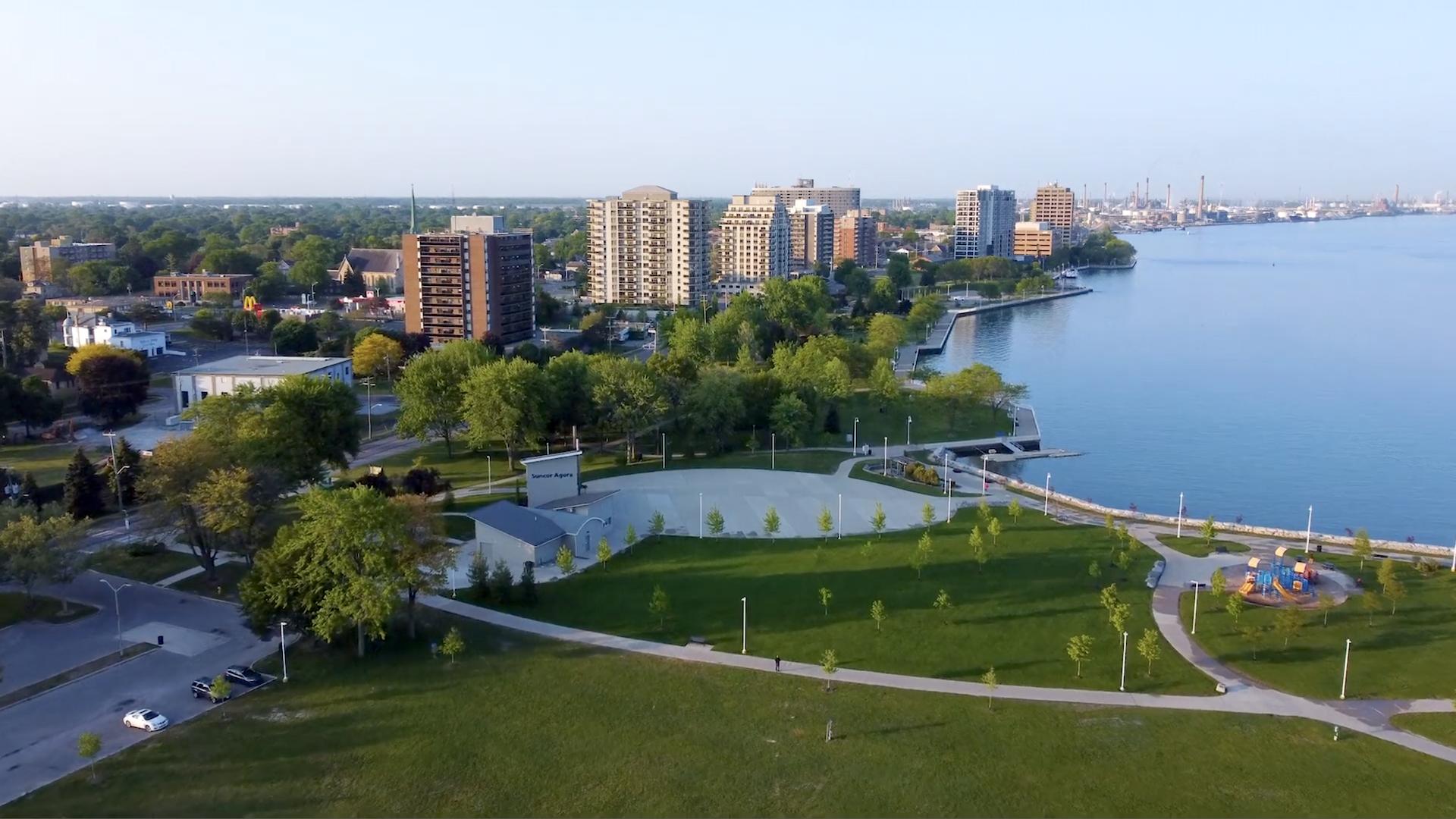
Whether you are selecting a commercial appraiser in Lambton County for a new construction loan, updating a commercial building appraisal in Lambton County for refinancing, or benchmarking performance against peers, the expectations are the same: sound data, local market insight, and a valuation approach that puts income durability at the center. With those pieces in place, the process is predictable, and the result is far more likely to align with your lived experience of the asset.